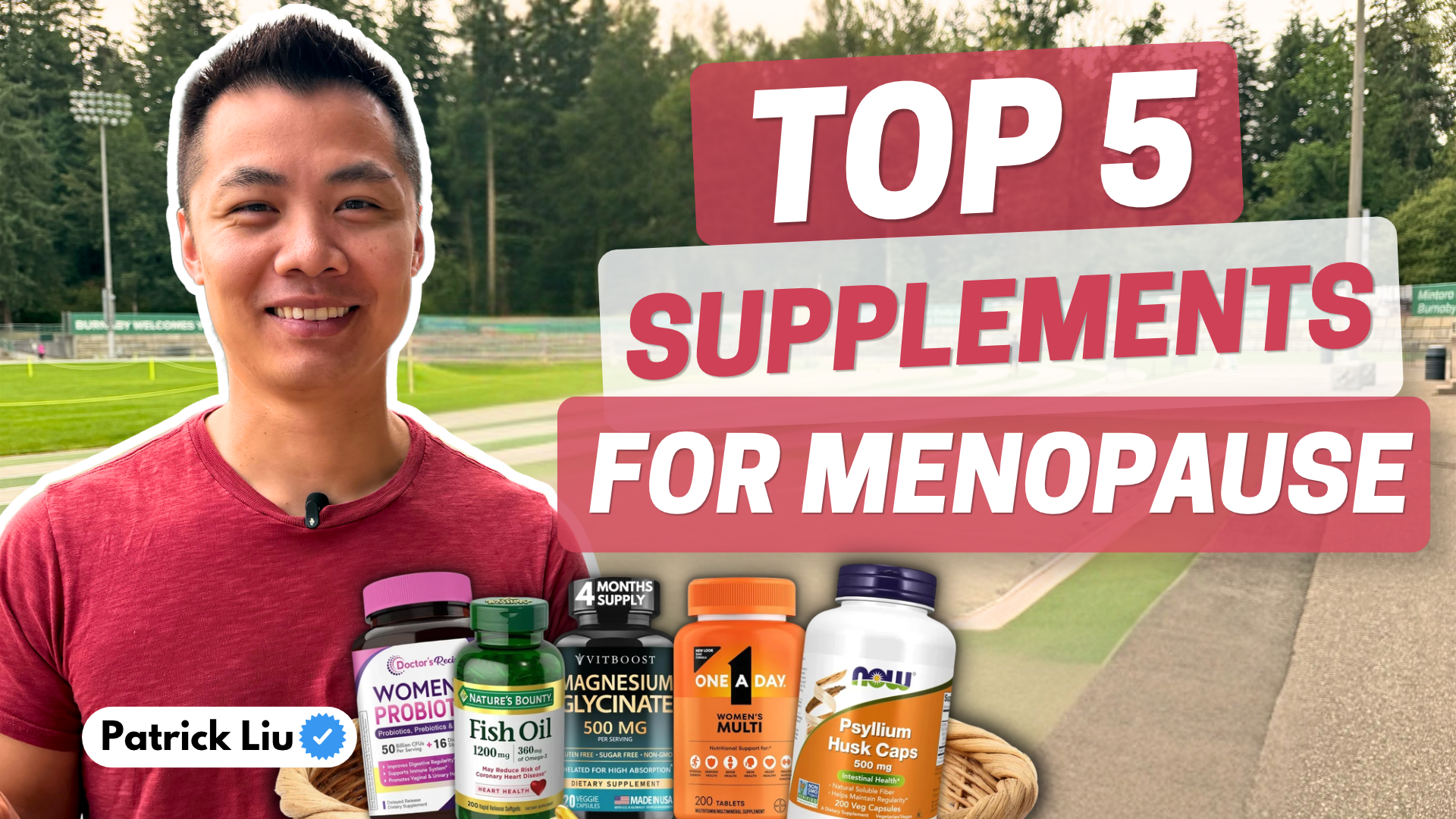
5 Best Supplements for Women Over 40 & Menopause
5 Best Supplements for Women Over 40: What Actually Helps During Menopause and Weight Loss?
Have we ever walked into a supplement store or scrolled through Amazon and wondered:
"Which supplements do I actually need to lose weight during menopause?"
Maybe we've seen advertisements promising to burn stubborn belly fat, balance our hormones, boost our metabolism, or eliminate cravings.
And suddenly, we're looking at dozens of different supplements, each claiming to be the solution.
Fish oil.
Magnesium.
Probiotics.
Multivitamins.
Fiber supplements.
But which ones are actually worth taking?
And more importantly, can supplements really help us lose weight during perimenopause and menopause?
If we're over 40 and struggling with weight gain, fatigue, poor sleep, bloating, or stubborn belly fat, it's understandable that we'd want something to make the process easier.
But here's something important to understand:
Supplements aren't a magic solution for weight loss. They're tools that can help support our overall health when used appropriately.
Hi, I'm Coach Patrick Liu. I've been helping women lose weight since 2017, and I've worked with more than 1,400 clients on building healthier, more sustainable habits.
In this article, we'll explore five supplements worth knowing about during menopause, how they may support our health, and how to decide which ones are actually worth taking.
Do We Really Need Supplements to Lose Weight During Menopause?
Before we explore the five supplements, let's understand something important.
The foundation of sustainable weight loss isn't supplements. It's our nutrition, movement, sleep, and everyday habits.
When I work with my clients, I encourage them to focus on three things:
Nutrition: Eating balanced meals with enough protein, vegetables, and fiber while managing our overall calorie intake.
Exercise and movement: Building strength, walking regularly, and finding physical activities we can maintain.
Recovery and consistency: Getting adequate sleep, managing stress, and creating routines that work with our lifestyle.
Where do supplements fit into this picture?
They're an additional tool.
For example, if we're not eating enough fiber, a fiber supplement might help us reach our daily target.
If we're not getting enough of a particular vitamin or mineral, supplementation may help fill that gap.
And if we're experiencing digestive problems, certain supplements may be useful depending on the underlying cause.
But taking supplements without improving our eating and exercise habits is unlikely to produce meaningful weight loss.
We can't supplement our way out of an inconsistent lifestyle.
The good news is that we don't need to take dozens of supplements.
Let's explore five options that are worth understanding.
The 5 Best Supplements for Women Over 40
Here are five supplements I regularly discuss with women working toward better health during perimenopause and menopause.
Supplement | Primary Potential Benefit |
|---|---|
1. Fish Oil (Omega-3) | Heart health and triglyceride management |
2. Women's Multivitamin | Filling nutritional gaps |
3. Magnesium | Muscle and nerve function; correcting low intake |
4. Probiotics | Supporting specific digestive concerns |
5. Psyllium Husk Fiber | Regular bowel movements, fullness, and cholesterol management |
Not everyone needs all five. The best choices depend on our diet, symptoms, medical history, and nutritional needs.
1. Fish Oil (Omega-3): Supporting Heart Health During Menopause
The first supplement worth understanding is fish oil, also known as omega-3 fatty acids.
When it comes to losing weight, one of the first things we need to understand is where calories come from.
There are three main macronutrients:
Protein: Approximately 4 calories per gram.
Carbohydrates: Approximately 4 calories per gram.
Fat: Approximately 9 calories per gram.
Notice something interesting?
Fat contains more than twice as many calories per gram as protein or carbohydrates.
That doesn't make fat unhealthy. In fact, dietary fats are essential for our health.
But when we're trying to lose weight, it's important to pay attention to portions because calories can add up quickly.
Omega-3s are a type of healthy fat that our bodies need.
And unlike many supplements advertised for weight loss, omega-3s have established roles in several aspects of our health.
Why Omega-3s Matter During Menopause
During perimenopause and menopause, estrogen levels fluctuate and eventually decline.
These hormonal changes are associated with changes in body fat distribution, cholesterol levels, and cardiovascular health.
As we get older, protecting our heart becomes increasingly important.
Omega-3 fatty acids, particularly EPA and DHA, play important roles in our bodies.
Research suggests that omega-3s may:
Help lower elevated triglycerides: Omega-3s can reduce triglyceride levels, although higher therapeutic doses should be medically supervised.
Support cardiovascular health: Eating fatty fish regularly is associated with heart-health benefits.
Support normal brain function: DHA is an important structural component of our brain.
Play a role in inflammatory processes: Omega-3s are involved in pathways that regulate inflammation.
However, it's important to recognize that taking fish oil hasn't consistently been shown to cause weight loss or prevent heart disease in otherwise healthy adults.
Should We Take Fish Oil or Eat More Fish?
Whenever possible, I encourage getting omega-3s from food first.
Some excellent sources include:
Salmon
Sardines
Mackerel
Herring
Trout
For many adults, eating fatty fish approximately twice per week is a practical goal.
If we rarely eat fish, an omega-3 supplement may be worth discussing with our healthcare provider.
When choosing one, check the amount of EPA and DHA, not just the total amount of fish oil listed on the bottle.
And remember that fish oil still contains calories. It's a concentrated source of omega-3s, not a calorie-free substitute for dietary fat.
The takeaway: Omega-3s can support important aspects of our health, but they aren't belly-fat burners.
2. Women's Multivitamin: Filling Nutritional Gaps During Weight Loss
The second supplement I frequently discuss with my clients is a high-quality women's multivitamin.
Here's why.
When we're trying to lose weight, we generally need to consume fewer calories than our bodies burn.
But there's something we need to be careful about.
Eating fewer calories shouldn't mean getting fewer essential nutrients.
For example, imagine that we normally consume 2,200 calories per day.
If we reduce our intake to 1,700 calories to support weight loss, we're now eating less food overall.
Depending on our food choices, that could mean getting less of certain vitamins and minerals.
This is where a multivitamin may be helpful.
Important Nutrients for Women Over 40
Some nutrients deserve particular attention as we approach and move through menopause.
Vitamin D
Vitamin D helps our bodies absorb calcium and supports bone health.
This becomes especially important after menopause, when declining estrogen levels accelerate bone loss.
Calcium
Calcium plays a major role in maintaining strong bones, as well as supporting muscle and nerve function.
Women generally need approximately 1,000 mg daily through age 50 and 1,200 mg daily starting at age 51.
Vitamin B12
Vitamin B12 supports red blood cell formation and normal nerve function.
As we get older, some of us may have difficulty absorbing enough vitamin B12 from food.
Iron
Iron helps our bodies produce hemoglobin, which carries oxygen through the bloodstream.
Women who experience heavy menstrual bleeding during perimenopause may be at increased risk of iron deficiency.
However, our iron needs usually decrease after menstruation stops, so extra iron isn't automatically necessary after menopause.
How to Choose a Multivitamin
When selecting a multivitamin, I recommend looking for one that:
Is appropriate for our age and life stage.
Provides reasonable amounts of essential vitamins and minerals rather than unnecessarily high doses.
Comes from a reputable manufacturer with independent quality testing.
Doesn't duplicate large amounts of nutrients we're already taking separately.
A multivitamin can help address nutritional gaps, but it cannot replace a healthy diet.
For example, taking a multivitamin doesn't provide the fiber, protein, and other beneficial compounds we'd get from eating vegetables, fruit, legumes, and whole grains.
And while a multivitamin may help correct a deficiency, it won't directly increase our metabolism or cause weight loss.
The takeaway: Think of a multivitamin as nutritional backup, not a replacement for nutritious food.
3. Magnesium: Supporting Muscle Function and Healthy Sleep
The third supplement worth discussing is magnesium.
And this one is particularly interesting for women going through perimenopause or menopause.
Have we ever found ourselves lying in bed at 3 a.m., wide awake, wondering why we can't fall back asleep?
Maybe we went to bed exhausted.
But then we woke up because of a hot flash.
Or we started thinking about everything we needed to accomplish the next day.
Before we knew it, another hour had passed.
And when our alarm went off in the morning, we felt like we barely slept.
Unfortunately, sleep disturbances are common during menopause.
And poor sleep doesn't just affect how tired we feel.
It can also make weight management more challenging.
The Connection Between Sleep and Weight Loss
When we're not getting enough sleep, several things can happen.
We may experience:
Increased hunger and cravings.
Lower energy levels throughout the day.
Greater difficulty managing stress.
Reduced motivation to exercise.
More difficulty making consistent food choices.
Think about it.
When we've slept eight hours and feel refreshed, preparing a healthy breakfast and going for a walk might feel manageable.
But after sleeping only four hours?
Suddenly, skipping our workout and grabbing something quick and sugary can feel much more appealing.
Sometimes improving our weight loss habits starts with improving our sleep.
How Magnesium May Help
Magnesium is an essential mineral involved in hundreds of processes throughout our bodies.
It supports:
Normal muscle and nerve function.
Energy production.
Bone health.
Blood pressure regulation.
Normal heart rhythm.
Magnesium is also involved in biological processes associated with sleep.
However, research on magnesium supplements specifically for improving sleep is still limited, and results are mixed.
If we're not getting enough magnesium, correcting that low intake may be beneficial. But magnesium isn't a proven treatment for menopausal insomnia or hot flashes.
How Much Magnesium Should We Take?
Women over 30 generally need approximately 320 mg of magnesium per day from all sources, including food.
Good food sources include:
Pumpkin seeds
Spinach
Beans
Almonds
Whole grains
Dark leafy vegetables
Some people choose a supplement that provides around 200 mg of elemental magnesium daily.
But we should check with our healthcare provider before starting, particularly if we have kidney disease or take medications that interact with magnesium.
The general upper limit for magnesium from supplements and medications is 350 mg per day for adults unless a healthcare professional recommends otherwise.
The takeaway: Getting enough magnesium is important for overall health, but supplements aren't a guaranteed solution for sleep problems or weight loss.
4. Probiotics: Supporting Gut Health and Digestion
The fourth supplement I want to discuss is probiotics.
Now, let's talk about something many women experience during menopause but don't always feel comfortable discussing.
Bloating and constipation.
Maybe we wake up feeling comfortable in our clothes.
But by the end of the day, our stomach feels bloated.
Or perhaps we've noticed that we're not having regular bowel movements anymore.
These symptoms can be frustrating, especially when we're already trying to improve our nutrition and lose weight.
One factor that can influence digestion is the community of microorganisms living in our digestive system, commonly called the gut microbiome.
What Are Probiotics?
Probiotics are live microorganisms that, when consumed in adequate amounts, provide a health benefit.
Some probiotic strains have been studied for specific digestive problems, including certain types of diarrhea and symptoms associated with irritable bowel syndrome.
However, not every probiotic works the same way.
And not every digestive problem can be solved by taking one.
Can Menopause Affect Gut Health?
Estrogen changes, aging, medications, stress, diet, and other lifestyle factors may influence our digestive health and gut microbiome.
Researchers are also studying how menopause-related hormonal changes interact with the gut microbiome.
But we shouldn't assume that every case of bloating or constipation during menopause is caused by an imbalance in gut bacteria.
Several factors can contribute, including:
Inadequate fiber intake.
Not drinking enough fluids.
Changes in physical activity.
Certain medications.
Digestive conditions.
That's why it's important to identify the likely cause before choosing a supplement.
The Best Food Sources of Probiotics
Before spending money on probiotic supplements, I encourage getting fermented foods into our diet when possible.
Some examples include:
Plain yogurt with live cultures.
Kefir.
Kimchi.
Refrigerated, unpasteurized sauerkraut with live cultures.
Certain fermented vegetables.
Kombucha containing live microorganisms.
Not all fermented foods contain live probiotics by the time we eat them, so it's worth checking the label.
And when choosing kombucha or yogurt, I recommend paying attention to the added sugar content.
How to Choose a Probiotic Supplement
When shopping for probiotics, we'll often see labels advertising:
10 billion CFUs!
50 billion CFUs!
100 billion CFUs!
CFU stands for colony-forming units, a measure used to estimate the number of viable microorganisms.
But here's something important.
More CFUs doesn't automatically mean a better probiotic.
The specific strain and evidence supporting its use are more important than simply choosing the highest number.
A good probiotic should clearly identify its microorganisms and provide information about the amount expected to remain viable through the expiration date.
If we're experiencing persistent digestive symptoms, it's worth discussing them with a healthcare professional instead of automatically purchasing a probiotic.
The takeaway: Certain probiotics can support specific digestive concerns, but they aren't essential for everyone or proven menopause weight loss supplements.
5. Psyllium Husk: Supporting Fullness and Regular Bowel Movements
The fifth supplement is one of my favorites to discuss when we're working on better eating habits.
Fiber, specifically psyllium husk.
Why?
Because one of the biggest challenges during weight loss is managing hunger while eating fewer calories.
And fiber can help.
If you've followed my coaching content, you've probably heard me talk about the importance of protein.
Protein helps support muscle maintenance and can make meals more satisfying.
But here's something many people overlook:
We need to pay attention to fiber, too.
When someone starts a high-protein eating plan, they might increase their intake of chicken, eggs, protein shakes, and other protein-rich foods.
Those can all be great choices.
But if they're replacing vegetables, fruit, beans, and whole grains, their fiber intake may actually decrease.
And what can happen next?
Constipation.
Digestive discomfort.
And difficulty maintaining their new eating habits.
Why Fiber Is Important During Menopause
Fiber provides several important benefits.
1. Helps us feel fuller for longer
Fiber adds bulk to our meals, and some types of fiber slow the movement of food through our digestive system.
This can help improve fullness and make appetite management easier.
2. Supports regular bowel movements
Adequate fiber helps maintain normal bowel function and can reduce constipation.
3. Supports healthy cholesterol levels
Certain types of soluble fiber, including psyllium, can help lower LDL cholesterol.
4. Supports blood sugar management
Soluble fiber can slow carbohydrate absorption and help moderate blood sugar responses after meals.
These benefits can be especially useful as we work on improving our overall metabolic and cardiovascular health during menopause.
How Much Fiber Do Women Over 40 Need?
As a practical starting point, I encourage my clients to work toward approximately 25 grams of total dietary fiber per day, adjusting for age, individual needs, and tolerance.
The important word here is total.
We're aiming to get fiber from our food and, if needed, supplements combined—not 25 grams of extra supplemental fiber.
The Best Foods for Fiber
I recommend starting with whole foods whenever possible.
Some excellent choices include:
Broccoli
Brussels sprouts
Spinach and other vegetables
Raspberries and blackberries
Apples with the skin
Beans and lentils
Oats
Quinoa
Whole grains
And here's one of the simplest nutrition strategies I teach:
Aim for at least one fist-sized portion of vegetables with each main meal.
It's an easy visual reminder to include more nutrient-dense, fiber-rich foods throughout our day.
What About Nuts and Seeds?
Nuts and seeds can also provide fiber.
But they're relatively calorie-dense because they contain healthy fats.
For example, it's easy to eat several handfuls of nuts without realizing how many calories we've consumed.
That doesn't mean we should avoid them.
They're nutritious foods that can absolutely fit into a weight loss plan.
We simply want to be mindful of portions.
For additional fiber with relatively few calories, vegetables, beans, berries, and psyllium husk can be practical options.
Why I Like Psyllium Husk
Psyllium husk is a soluble, gel-forming fiber.
When mixed with water, it absorbs liquid and forms a thick consistency.
This is one reason it can help improve stool consistency and support regular bowel movements.
Psyllium may also improve fullness and help lower LDL cholesterol.
It isn't a fat-burning supplement, but it can help us build habits that support weight management.
If we choose to use it, we should:
Start with a small amount according to the product instructions.
Increase our intake gradually to minimize gas and bloating.
Mix it with the recommended amount of water and drink it promptly.
Follow the label's instructions for separating it from medications.
Psyllium should never be swallowed dry. Anyone with difficulty swallowing or certain gastrointestinal conditions should seek medical advice before using it.
The takeaway: Getting enough fiber is one of the most practical ways to support digestion, fullness, and overall health while losing weight.
Which Supplements Should We Actually Prioritize?
Now that we've covered all five supplements, let's answer an important question.
Do we really need to take all of them?
Not necessarily.
In my coaching practice, I often start by reviewing whether clients are meeting their nutritional needs, particularly their intake of healthy fats, vitamins, minerals, and fiber.
But rather than recommending that everyone take the same supplements, it's more helpful to identify where we might have gaps.
For example:
If We're Struggling With... | What to Consider First |
|---|---|
Rarely eating fatty fish | More omega-3-rich foods or discussing fish oil |
Limited food variety while dieting | Improving diet quality or considering a multivitamin |
Low magnesium intake | Magnesium-rich foods or appropriate supplementation |
Certain digestive concerns | Identifying the cause and considering targeted probiotics |
Low fiber intake or constipation | More fiber-rich foods or psyllium husk |
We may discover that we don't need some of these supplements at all.
And that's perfectly fine.
The goal is to use supplements when they offer a meaningful benefit, not simply because they're popular.
5 Common Supplement Mistakes to Avoid During Menopause
Before purchasing supplements, there are a few mistakes I encourage my clients to avoid.
1. Expecting Supplements to Burn Belly Fat
Unfortunately, there's no reliable evidence that these five supplements selectively burn stubborn menopausal belly fat.
They may support our health, but lasting weight loss still depends largely on our overall eating patterns, activity, sleep, and consistency.
2. Taking More Than We Need
More isn't always better.
Some vitamins and minerals can be harmful in excessive amounts.
That's why we should always review the dosage and avoid stacking multiple supplements with overlapping ingredients.
3. Replacing Whole Foods With Supplements
A multivitamin can't replace vegetables.
A fiber supplement can't provide every benefit of fruit and whole grains.
And fish oil doesn't replace all the nutrients we'd get from eating fish.
Food first, supplements when appropriate.
4. Ignoring the Real Reason We're Tired or Bloated
If we're feeling constantly exhausted, taking magnesium or a multivitamin might not solve the problem.
Fatigue can have many causes, including inadequate sleep, iron deficiency, thyroid conditions, and other health concerns.
Similarly, persistent bloating and constipation may require a proper medical assessment.
It's important to address the underlying cause rather than simply adding more supplements.
5. Spending Money Before Building Better Habits
Imagine spending $150 per month on supplements while rarely exercising, consistently sleeping five hours, and struggling to eat balanced meals.
Would buying another supplement really be our best next step?
Probably not.
Sometimes the most effective change is also the simplest.
Eating more vegetables.
Walking consistently.
Preparing meals ahead of time.
Getting enough sleep.
And building habits we can maintain long term.
Frequently Asked Questions About Supplements During Menopause
What are the best supplements for menopausal women trying to lose weight?
There isn't one supplement that consistently produces meaningful weight loss during menopause. Omega-3s, multivitamins, magnesium, probiotics, and psyllium husk may support different aspects of our health depending on our needs.
Among these options, psyllium husk may be especially useful if our diet is low in fiber, because it can help support fullness and bowel regularity.
Can fish oil help us lose belly fat during menopause?
Fish oil provides omega-3 fatty acids that may support certain cardiovascular health markers, particularly triglyceride levels.
However, there's insufficient evidence that fish oil directly causes significant weight loss or specifically reduces belly fat.
Does magnesium help with menopausal weight gain?
Magnesium is important for normal energy metabolism, muscle function, and overall health.
But magnesium supplements haven't been shown to directly cause meaningful weight loss.
If our magnesium intake is inadequate, correcting that deficiency may support normal body function.
Should women over 50 take a multivitamin every day?
Not necessarily.
A multivitamin may be useful if our diet doesn't consistently provide enough essential nutrients.
However, women over 50 may have different nutritional requirements, especially for calcium, vitamin D, vitamin B12, and iron.
The best option depends on our diet and individual medical needs.
Are probiotics good for menopause bloating?
Certain probiotic strains may help with particular digestive symptoms, but results vary.
Because bloating can have many causes, probiotics won't necessarily help everyone.
Persistent or worsening bloating should be assessed by a healthcare professional.
How much fiber should women over 40 eat every day?
Approximately 25 grams of total fiber per day is a practical goal for many women, although recommendations vary with age and calorie needs.
We should try to get most of our fiber from vegetables, fruit, legumes, and whole grains.
Psyllium husk can help fill the gap when food alone isn't enough.
Can we take fish oil, magnesium, multivitamins, probiotics, and fiber together?
Some people may be able to take these supplements together, but we shouldn't assume that every combination is appropriate.
Supplements can interact with medications or affect the absorption of certain nutrients and medicines.
It's best to review our supplement routine with a pharmacist or healthcare professional, especially if we're taking prescription medications or managing a medical condition.
Final Thoughts: Supplements Can Help, but Our Habits Matter More
When we're going through perimenopause or menopause, it can feel like our bodies are changing faster than we can keep up.
We may notice more belly fat.
Poorer sleep.
More bloating.
Lower energy.
And a scale that doesn't seem to move despite our efforts.
It's understandable that we'd want a supplement to make everything easier.
But here's what I want us to remember:
The most effective weight loss strategy isn't about finding the perfect supplement. It's about creating healthy habits we can maintain.
The five supplements we've explored may each have a place:
1. Fish Oil (Omega-3): Supports omega-3 intake and may help manage elevated triglycerides.
2. Women's Multivitamin: Can help fill nutritional gaps when our diet doesn't provide everything we need.
3. Magnesium: Supports muscle, nerve, and bone health, particularly when our intake is low.
4. Probiotics: May help with certain digestive concerns when we choose an appropriate strain.
5. Psyllium Husk: Supports bowel regularity, fiber intake, and healthy cholesterol levels.
But none of them replaces nutritious meals, regular movement, adequate sleep, and consistency.
And we certainly don't need to start taking all five tomorrow.
Start by looking at what we're already doing well and what could use improvement.
Maybe we need more vegetables.
Maybe we need to improve our sleep.
Maybe we need to eat more protein and fiber.
Or maybe a specific supplement could help address a genuine nutritional gap.
We don't need to change everything overnight. We just need to keep getting 1% better every day.
Those small improvements, repeated consistently, can make a meaningful difference in our health and weight loss journey.
Before starting supplements, check with a qualified healthcare professional, particularly if we have medical conditions, take medications, or are unsure whether we need them.
Watch the Full YouTube Video
Want to hear me explain all five supplements and how they fit into a menopause weight loss plan?
Watch: 5 Supplements Every Woman Over 40 Should Know About
And if we're constantly feeling hungry, struggling with cravings, or finding it difficult to stop snacking throughout the day, be sure to check out my next video.
In it, I'll explain which foods can help us feel fuller for longer and how we can manage our appetite naturally without relying on expensive supplements or extreme diets.
Ready to Lose Weight During Menopause Without Counting Calories?
Hi, I'm Coach Patrick Liu, a Menopausal Weight Loss Coach.
Since 2017, I've helped over 1,400 women improve their fitness, develop healthier eating habits, and work toward their weight loss goals.
Through my online coaching program, we focus on:
Live personal training over Zoom to build strength and improve fitness.
Personalized nutrition coaching without counting every calorie.
Daily accountability and support to help us stay consistent.
Sustainable habits that fit into our busy lives.
My goal is to help women lose 20–50 pounds during menopause without counting calories or living in the gym.
Book a FREE Personal Training Consultation With Coach Patrick to learn how our coaching program works.
Disclaimer: This article is for educational purposes only and does not replace individualized medical or mental health advice. Results vary from person to person.