Best Diets for Weight Loss After 40
Ranking the 15 Best and Worst Diets for Weight Loss After 40
Every year, millions of people start a new diet hoping that this will finally be the one that works.
Some try keto. Others start intermittent fasting, count calories, go carnivore, or switch to the Mediterranean diet.
But with so many different approaches, which diet is actually the best for losing weight and keeping it off?
If we're over 40 and going through perimenopause or menopause, choosing a sustainable eating plan becomes especially important.
I've been helping women lose weight since 2017, working with more than 1,400 clients to develop healthier eating habits.
In this article, I'll rank 15 popular diets based on four factors:
Effectiveness: Does it help us lose weight?
Sustainability: Can we maintain it long-term?
Simplicity: How easy is it to follow?
Practicality: How well does it work in everyday life?
And at the end, I'll share my favorite combination of three nutrition strategies for sustainable weight loss.
The Best and Worst Diets: My Rankings
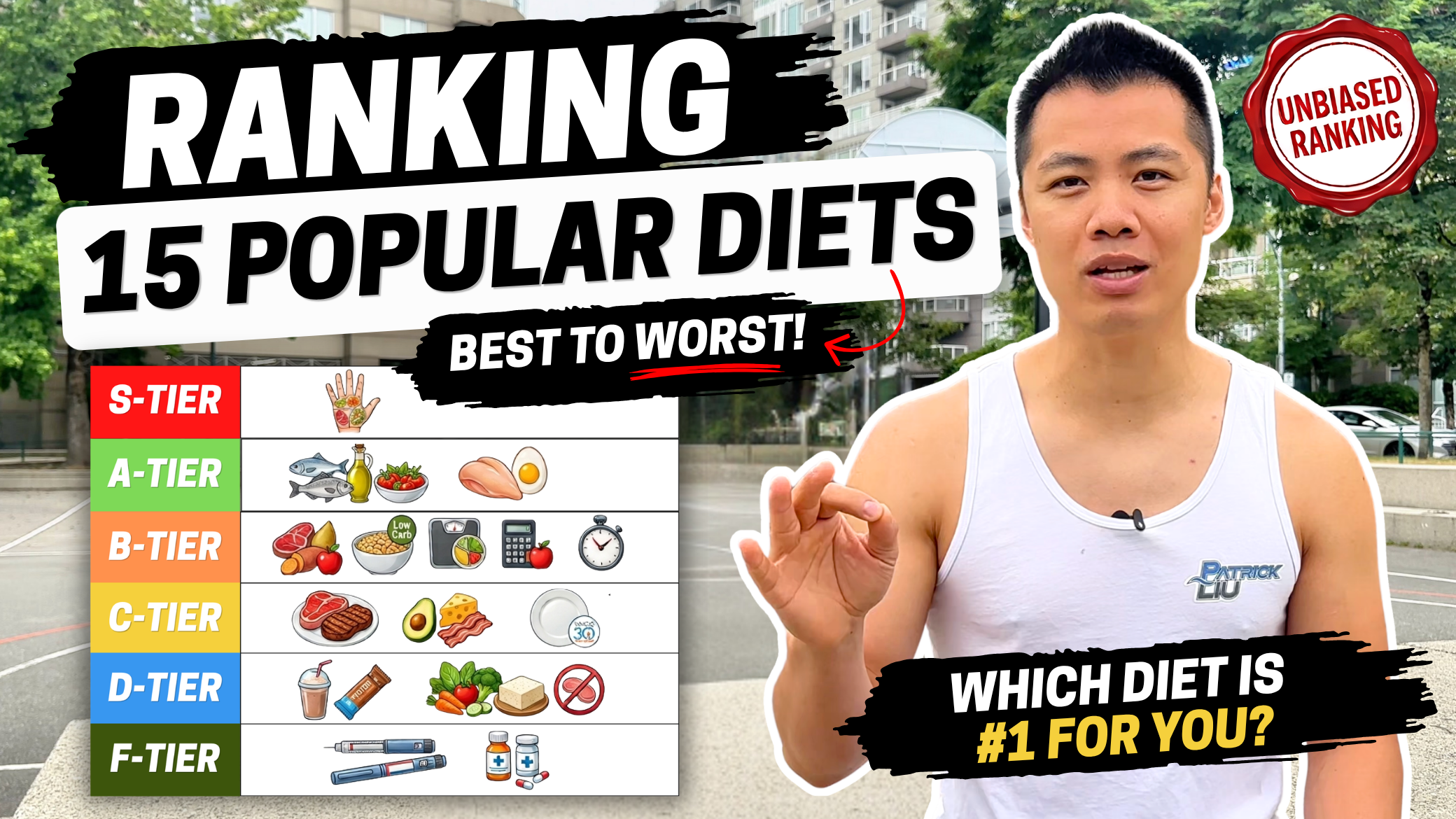
Here's how I personally rank these approaches for the average person looking for sustainable weight loss.
These are coaching-based ratings, not scientific rankings of each diet's medical effectiveness.
Diet | My Rating |
|---|---|
Hand Method | S |
Mediterranean Diet | A |
High-Protein Diet | A |
Paleo Diet | B |
Low-Carb Diet | B |
Flexible Dieting (IIFYM) | B |
Calorie Counting | B |
Intermittent Fasting | B |
Vegetarian Diet | B |
Carnivore Diet | C |
Keto Diet | C |
Whole30 | C |
Vegan Diet | C |
Meal Replacement Diet | D |
GLP-1 Medications | Medical treatment — not ranked as a diet |
1. Carnivore Diet — C Tier
The carnivore diet focuses almost exclusively on animal foods like meat, eggs, fish, and certain dairy products.
It eliminates fruits, vegetables, grains, and legumes.
Can we lose weight? Absolutely.
Eating more protein and eliminating many highly processed foods may naturally reduce our calorie intake.
The downside: It's extremely restrictive, eliminates important sources of fiber, and may be difficult to maintain during vacations, family dinners, and social events.
For most people, I believe there are more balanced and sustainable options.
2. Meal Replacement Diets — D Tier
Meal replacement diets involve replacing one or more regular meals with shakes, bars, or specially formulated products.
They can simplify portion control and make it easier to manage calories.
However, relying heavily on meal replacements may prevent us from learning how to prepare balanced meals and manage portions independently.
Some nutritionally complete meal replacements can be useful, particularly in structured medical programs.
My recommendation: Use meal replacements for convenience when appropriate, rather than making them the foundation of our long-term nutrition.
3. Paleo Diet — B Tier
The Paleo diet focuses on foods such as lean meat, fish, vegetables, fruits, nuts, and seeds.
It generally eliminates grains, legumes, dairy, and many processed foods.
I like that it encourages whole, minimally processed foods.
The downside: It eliminates nutritious foods like beans, whole grains, and dairy without a clear medical reason for most people.
4. Vegan Diet — C Tier
A vegan diet eliminates all animal products, including meat, fish, eggs, and dairy.
It can be very healthy when properly planned, providing plenty of vegetables, fruit, legumes, and fiber.
However, women over 40 who are trying to preserve muscle during weight loss need to pay attention to protein intake.
My concern: Meeting protein and certain micronutrient requirements, especially vitamin B12, may require more planning.
A vegan diet can absolutely support weight loss. I simply believe some people may find other approaches easier to follow.
5. Mediterranean Diet — A Tier
The Mediterranean diet is one of my favorite eating patterns.
It emphasizes:
Vegetables and fruit.
Whole grains and beans.
Fish and lean proteins.
Olive oil, nuts, and other healthy fats.
It's also one of the most researched dietary patterns, with strong evidence supporting cardiovascular health.
The downside: Healthy foods still contain calories.
For example, olive oil and nuts are nutritious but calorie-dense.
Without portion awareness, we can still overeat.
6. GLP-1 Medications — A Medical Tool, Not a Diet
Medications such as Wegovy and Ozempic have become increasingly popular.
GLP-1 medications can reduce appetite and increase feelings of fullness, making them effective for weight management in appropriately selected patients.
However, they're prescription medications, not diets, so I don't believe they should be ranked using the same system.
Potential downsides include cost, gastrointestinal side effects, and weight regain after stopping treatment.
My recommendation: For individuals who meet medical criteria, these medications can be valuable tools alongside nutrition, physical activity, and appropriate medical supervision.
We should never stop prescribed medication without discussing it with our healthcare provider.
7. Keto Diet — C Tier
The ketogenic diet dramatically reduces carbohydrate intake while emphasizing fats and moderate protein.
Some people experience significant initial weight loss, partly because of changes in water weight.
And keto can help some people reduce their overall calorie intake.
The downside: Eliminating many carbohydrate-rich foods can make eating socially and maintaining the diet more challenging.
I don't believe we need to give up fruit, oats, rice, or other nutritious carbohydrates to lose weight successfully.
8. High-Protein Diet — A Tier
This is one of my favorite nutrition strategies.
Protein supports muscle maintenance, helps us feel satisfied after meals, and can make managing hunger easier.
Some excellent sources include:
Chicken and fish.
Lean beef.
Eggs.
Greek yogurt.
Cottage cheese.
Tofu and other soy foods.
Getting enough protein becomes particularly important during menopause because maintaining muscle helps support strength and mobility.
The downside: Eating more protein doesn't automatically mean we'll lose weight.
We still need appropriate portions and a balanced diet.
9. Low-Carb Diet — B Tier
A low-carb diet reduces foods like bread, rice, pasta, sweets, and sugary drinks.
Unlike keto, it generally allows more flexibility.
Reducing sugary drinks and highly refined carbohydrates can be beneficial.
However, not all carbohydrates are unhealthy.
Fruit, beans, oats, and whole grains provide important nutrients and fiber.
My recommendation: Focus on the quality and quantity of carbohydrates rather than eliminating them entirely.
10. Whole30 — C Tier
Whole30 is a 30-day eating program that eliminates added sugar, alcohol, grains, legumes, dairy, and several other food categories.
It encourages people to focus on whole foods.
However, it's quite restrictive and can be difficult to maintain socially.
My concern: A short-term food reset doesn't necessarily teach us how to maintain healthy eating habits afterward.
For long-term weight loss, I prefer strategies we can follow beyond 30 days.
11. Flexible Dieting (IIFYM) — B Tier
IIFYM stands for If It Fits Your Macros.
Instead of eliminating foods, we track our protein, carbohydrate, fat, and often calorie intake.
We can still enjoy pizza, chocolate, and other favorite foods in moderation.
The downside: Not everyone enjoys tracking and measuring food every day.
It can be effective for people who like structure, but it isn't necessary for everyone.
12. Calorie Counting — B Tier
Calorie counting focuses on tracking how much energy we consume.
And because weight loss requires an energy deficit over time, monitoring calories can be useful.
But here's the problem:
Many people find tracking every meal exhausting.
My recommendation: If calorie counting works for us, that's great. But if we dislike tracking, there are simpler ways to manage our portions.
13. Hand Method — S Tier
This is my favorite nutrition strategy and one I teach many of my clients.
Instead of counting calories or weighing our food, we use our hands to estimate portions.
Here's how it works:
One fist: Vegetables.
One palm: Protein.
One cupped hand: Carbohydrates.
One thumb: Healthy fats.
It's simple, practical, and easy to use almost anywhere.
At home, restaurants, vacations, or family dinners, we can estimate portions without needing a food scale.
Of course, portions may need to be adjusted based on our body size, activity level, and goals.
Why I give it an S: It teaches portion awareness without requiring us to track every calorie.
14. Intermittent Fasting — B Tier
Intermittent fasting focuses on when we eat rather than exactly what we eat.
For example, we might eat within a 12-hour window and fast for the remaining 12 hours.
Some people prefer a shorter eating window.
Fasting can help reduce unnecessary snacking and make meal planning simpler.
However, research generally suggests intermittent fasting produces weight loss comparable to other approaches when overall calorie intake is similar.
My recommendation: Use fasting as an optional scheduling strategy, not a requirement for weight loss.
15. Vegetarian Diet — B Tier
A vegetarian diet eliminates meat and fish but may include eggs and dairy.
With foods like Greek yogurt, eggs, tofu, lentils, and beans, it can provide plenty of protein.
It's also compatible with healthy weight management.
The downside: We may need additional planning to meet our protein and nutrient needs.
For women who enjoy plant-based eating, this can be an excellent long-term approach.
My Ultimate S-Tier Diet: Combining 3 Simple Strategies
After working with more than 1,400 clients, one of my favorite approaches combines three nutrition strategies:
1. Mediterranean Diet — WHAT should we eat?
Focus on nutritious whole foods, including vegetables, fruit, lean proteins, whole grains, and healthy fats.
2. Hand Method — HOW MUCH should we eat?
Use simple hand-sized portions instead of constantly counting calories.
3. Intermittent Fasting — WHEN should we eat?
If it suits our lifestyle, use a consistent eating schedule to help manage unnecessary snacking.
Together, these three strategies answer the most important questions about nutrition.
What to eat. How much to eat. When to eat.
The beauty of this approach is its flexibility.
We can enjoy our favorite foods, eat at restaurants, travel, and maintain a healthy lifestyle without following overly restrictive rules.
And if fasting doesn't work for us, we can simply maintain regular meals instead.
Frequently Asked Questions About Weight Loss Diets
What's the best diet for women over 40?
The best diet is one that helps us maintain an appropriate calorie intake, get enough protein and nutrients, and stay consistent long-term. Mediterranean-style eating combined with portion awareness is an excellent starting point.
Is keto better than a low-calorie diet?
Not necessarily. Both approaches can support weight loss. Long-term results depend largely on calorie intake, nutritional quality, and how consistently we can follow the plan.
Do we need to count calories to lose weight?
No. Calorie counting is one useful tool, but portion control strategies like the Hand Method can help us manage our intake without tracking everything.
Does intermittent fasting work during menopause?
Intermittent fasting can help some women manage their eating schedule and calorie intake, but it isn't consistently superior to other calorie-controlled approaches.
Final Thoughts: The Best Diet Is the One We Can Maintain
With so many different diets available, it's easy to feel overwhelmed.
But sustainable weight loss doesn't require eliminating entire food groups, following extreme restrictions, or constantly tracking everything we eat.
We need a nutrition strategy that fits our lifestyle.
For many of my clients, that means combining Mediterranean-style food choices with the Hand Method and, when appropriate, a simple eating schedule.
Remember:
We don't need the perfect diet. We need habits we can maintain consistently.
And we don't have to change everything overnight.
We just need to keep getting 1% better every day.
Watch the Full YouTube Video: Ranking the Best and Worst Diets for Weight Loss
Ready to Lose Weight During Menopause Without Counting Calories?
Hi, I'm Coach Patrick Liu, a Menopausal Weight Loss Coach.
Since 2017, I've helped over 1,400 women improve their fitness, develop healthier eating habits, and work toward their weight loss goals.
Through my online coaching program, we focus on:
Live personal training over Zoom to build strength and improve fitness.
Personalized nutrition coaching without counting every calorie.
Daily accountability and support to help us stay consistent.
Sustainable habits that fit into our busy lives.
My goal is to help women lose 20–50 pounds during menopause without counting calories or living in the gym.
Book a FREE Personal Training Consultation With Coach Patrick to learn how our coaching program works.
Disclaimer: This article is for educational purposes only and does not replace individualized medical or mental health advice. Results vary from person to person.